
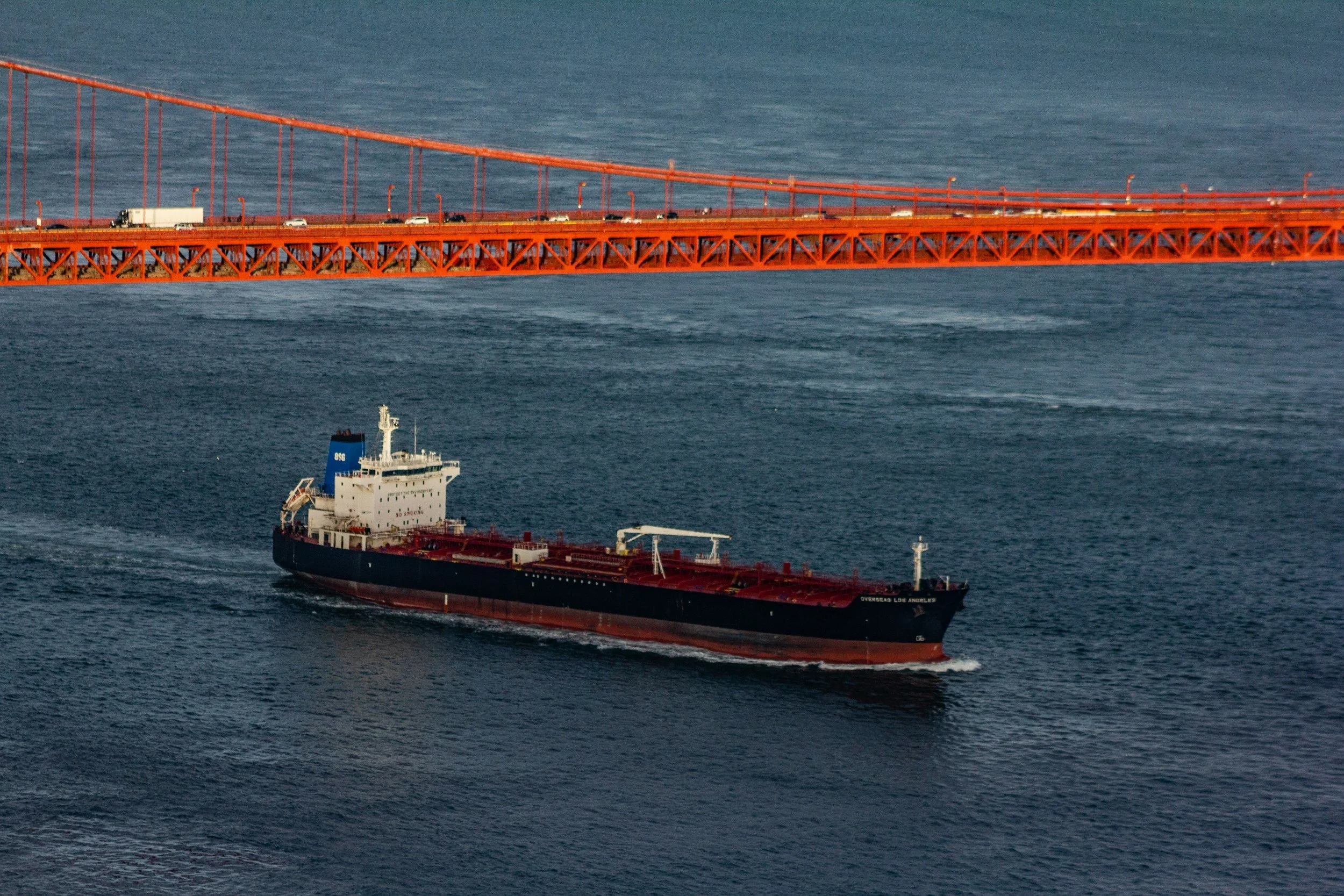
President Trump has made much noise about possible action against Iran following the US Midterm elections. We see three broad scenarios for tanker markets.
By Mary Melton
1. Large-scale escalation: initially bullish for rates, but then weakened by tanker demand destruction
The most extreme scenario would be a return to large-scale bombing or an escalation in warfare, with significant US attacks on Iranian military sites and infrastructure followed by Iranian retaliation against US strategic assets in the Middle East and/or other Middle East countries’ infrastructure, including energy infrastructure.
The immediate tanker reaction to this development would be bullish for rates. If Middle East Gulf exports were disrupted, Asian refiners would need to source replacement barrels in the Atlantic Basin. VLCCs would initially be out of position if long-haul Atlantic Basin demand resumed, given most of the fleet is in the East of Suez. VLCC earnings could spike initially, which could also benefit Suezmaxes and then Aframaxes if buyers were forced to move Atlantic cargoes East on smaller segments because of uneconomical Atlantic VLCC rates.
But this initial Atlantic rate rally would be unsustainable, and tankers repositioning from the Middle East would struggle to find employment if Middle East cargo disruption was extended. US crude inventories are currently at lows last reached in 1983, according to the EIA. The US is unable to release another large volume of exports from its SPR, like it did in the early stages of the war this spring, when its crude exports increased by roughly 1.2m b/d in Q2 compared to Q1.
If the disruption in the Middle East became sufficiently severe, Asian refiners would eventually have little choice but to reduce crude purchases and refining runs.
2. Limited escalation or status quo: inefficiency keeps a high floor under tanker rates
A more contained US escalation and Iranian retaliation, or a continuation of the current Hormuz status quo, would be the most supportive for tanker earnings because cargo loss would be limited while tanker trading remains highly inefficient.
Under this scenario, US strikes remain limited and Iran's response avoids widespread destruction of Gulf energy infrastructure. Iran would not seek to block the Strait of Hormuz further but may choose to concentrate retaliation on US military assets, Israel or individual ships.
In this scenario, physical oil remains available, but moving it becomes slower, riskier and more expensive.
The Hormuz shuttle trade would continue, with elevated security risks deterring many mainstream owners from transiting the Strait. In the case of limited strikes, longer waiting times for STS and higher compensation for ships prepared to operate in the region are likely. With each cargo becoming more inefficient, tanker supply would remain constrained even without a loss of exports.
With high freight and insurance costs in the Middle East, Atlantic Basin crude would continue moving to Asia. Red Sea disruption would provide another layer of inefficiency by keeping some vessels on longer routes.
The important distinction from the large-scale escalation scenario is there is less likelihood of the largescale loss of cargoes that would be engendered if Mideast crude could not exit the Gulf.
The main downside to this scenario is that a record-high volume of crude currently on the water towards Asia is set to discharge this week, which is likely to increase vessel availability in the Middle East in the coming weeks, given the high earnings on offer. But a continued strong Atlantic market should encourage some repositioning in the West.
3. Peace deal: Eventual deflation of rates, but gradually
A peace deal between the US and Iran remains the most bearish outcome for tanker earnings, but even here it would take time until the security situation improves sufficiently to restore normal tanker trading patterns.
Owners would need confidence that the Strait was genuinely safe before returning to Mideast Gulf trading. War-risk premiums would take time to decline, the shuttle system would unwind gradually, and damaged Mideast production and export infrastructure could not necessarily return instantaneously.
Global inventory rebuilding could soften the initial impact of a restoration in trading efficiency. A normalisation of Middle Eastern production could trigger substantial stock rebuilding. The rate of draws in global oil inventories through September has been 2.4m b/d since February, according to the EIA. Argus expects oil inventory recovery to pre-Iran war levels to take until mid-2028.
Political constraints on US action against Iran ease after the Midterms
Irrespective of the outcome post-Midterms, Trump has no more incentive to keep oil prices down. Without the constraint of public opinion over high fuel prices, he will be freed to act in Iran.
While the scale of any renewed conflict will determine the extent of the upside to tankers, persistent Middle East risk and trading inefficiency should keep a high floor under tanker rates.
The Trump administration has sent conflicting signals about intervention in Iran. After weeks of suggesting that military action could resume after the midterms, Trump said yesterday that he was not considering renewed strikes and suggested that an agreement with Tehran was possible. But at the same time, US forces yesterday carried out limited strikes on Qeshm Island at the mouth of the Strait of Hormuz. On balance, the deployment of US troops and munitions to the Middle East, evacuation of personnel from regional bases and warnings to Gulf states to prepare for a short conflict suggest some form of renewed US action is more likely than not
The election result could affect Trump's room for manoeuvre, in that a Democrat-controlled Congress could reduce military funding. But Trump has thus far acted mostly by Executive Action in prosecuting his war against Iran, which is likely to continue regardless of the results of the Midterms. The greater the Republican defeat, the more Trump could respond with actions to achieve victory in Iran.
Additionally, if the Republicans suffer a defeat and Trump is a ‘lame duck’ President for the remaining two years of his Presidency, he could join many of his predecessors in focusing on international instead of domestic affairs to secure his legacy.