
The three things investors should know this week
The Fed is very likely to cut interest rates in December. However the finance world is more fixated on who Jerome Powell’s likely successor is.
Kevin Hasset’s potential nomination has caused some stir in bond markets, as some traders fear that he could allow inflation to run higher.
History suggests that such fears are usually short-lived. Borrowing costs could rise, of course, but there’s little risk of a systemic event. For us, a bad outcome is not so much an uber-dovish Chair, but a divided and malfunctioning US central bank.
Summary
In the next few days or weeks, the US President will announce his pick for Fed Chair, most likely Kevin Hasset. Markets will likely welcome a Chair who has both experience and peer acceptance. A Presidential stalwart lowering the cost of capital despite higher inflation pressures could be positive for equities, but he could have a negative impact on bonds, which are more sensitive to rising prices. Despite the negative paradigm of the 1970s, when a less-independent Fed contributed to higher inflation and lower growth, we don’t believe that history will necessarily repeat itself. Instead on focusing on our, and the market’s opinion, on the President’s pick, we would see whether his appointment would increase division within the world’s most important central bank. This would be a truly worrying outcome for businesses and investors, as policy could become more uncertain, not managed, but “unmanaged” uncertainty.
This November, I officially entered my third decade of investing.
The first decade was about seeing a full cycle. And what a cycle it was. I went from “a child of the boom” to “a child of the Global Financial Crisis”, the most severe economic and financial challenge since 1929, in less than three years. The lesson I learned from the first decade is that history is a guide, not a map. As Edmurk, the father of modern conservatism, put it, “you can never plan the future by the past”. That cycles, economic and financial, don’t repeat themselves, they don’t last 5 years (this will be the subject of a future discussion), and similar investment and economic decisions may yield completely different results. Investing and business are about knowing the past and understanding the underlying principles, not trying to relive it.
The second decade was about learning another lesson: don’t fight the Fed (or generally the government). By 2015, I, along with 95% of active fund managers who were underperforming their benchmarks, was giving up on the foolish (it proved) notion that Quantitative Easing was bound to become inflationary and that the government couldn’t simply decide asset prices. It didn’t, and they could. Around that year, I also learned not to fight the European Central Bank either. The ECB had finally joined the printing-money party, and the Eurozone would live to fight another day, no matter how flawed the currency union and incomplete the banking union.
With valuations at very high levels, a trade war between the US and the rest of the world, political instability and inflation creeping up, the fundamentals don’t paint a pretty picture. If it weren’t for OPEC+ accepting oil $20 lower than last January and technology capital expenditure, the economic picture might have been materially worse. Which is why we are currently a neutral around our asset allocation, despite a great run in risk assets.
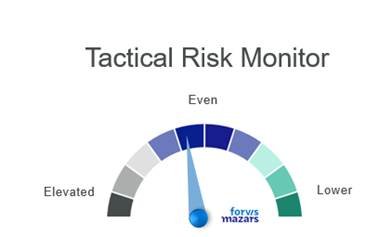
But overall, we are seeing building risks but we are not outright negative. This is primarily because the Fed is in rate-cutting mode and widely expected to deliver another one in December, however begrudgingly. When markets lost confidence about a rate cut in the Fed’s December meeting, US large caps plunged. Similarly, when New York Fed Chair Williams surprisingly sided with the doves, Stephen Miran and Christopher Waller, the latter an outsider for the Fed Chair, equity markets rebounded.
Adding to the positive catalysts, high-tech valuations are fully backed by the US government, as it races with China towards the pinnacle of AI dominance.
So yes, it’s still pretty much a Fed’s world. And thus, the President’s choice as to who will lead the world’s most important central bank will be a very important one for investors. A good choice could be the catalyst markets need to break new highs. A bad choice could be a reason for a correction.
But what constitutes a good choice for markets? I can’t of course speak for all investors, but I think there are objectively some traits that would make for a good Fed Chair:
1.Acceptance. The Fed Chair should command some respect from his or her peers. The position isn’t one of command, but an influential voice in a council of very high-minded, very acclaimed and highly successful economists, some from opposite sides of the political aisle. A partisan approach would probably yield very little fruit, scare markets and increase inflation expectations, which in turn could actually increase inflation.
2.Experience. Paul Volcker (1979-1987) was a very well noted economist with real market experience with a long history of government service. Alan Greenspan (1987-2006), aggressive and spotlight-loving, ran his own firm and had a very deep knowledge of how financial markets worked. Ben Bernanke (2006-2014) was the authority on the Great Depression, just the man to lead the Fed in its second such challenge and who went on to win a Nobel prize. Janet Yellen (2014-2018) was a noted economist, with government experience and years on the Fed Board. Bonus, she was married to an economics Nobel laureate! Jerome Powell (2018-2026) was a more political pick, to be sure. A lawyer by profession, and possibly what the Fed needed after decades of strong guidance from the Chair. His legacy will be one of democratisation of decision-making within the FOMC and fierce defence of the central bank’s independence.
While it is true that equity markets care mostly about keeping the cost of money low, and could be more indifferent to the White House’s pick, bond markets (which are roughly now the same size as equity markets) are very wary of inflation threats. They are also more important in the sense that their movements and volatility directly affect the borrowing capabilities of nations, and thus the fiscal leeway governments have to keep voters happy. Last week saw slightly higher yields and a steepening of the yield curve, as many investors began to consider the impact of a Fed that would allow inflation to run higher.
Should the short-term reaction keep us awake? We don’t necessarily think so.
Let’s circle back to the first two lessons.
History is a guide, not a map, in finance at least. Richard Nixon’s paradigm of directing the moves of Arthur Burns (Fed Chair 1970-1978) is certainly an anti-guide as to how a President should deal with the Fed. During Burns’ tenure, inflation rose substantially, and the economy experienced a decade of lower real growth. But we should also remember that we were at the beginning of the debt cycle, just after the abandonment of the Gold Standard, that the Fed’s market intervention capabilities were not as great, nor was the market so responsive to its guidance. Also finance wasn’t nearly as developed as it is today, in terms of hedging (and amplifying) risks. A pick without acceptance could, of course, lead to market turbulence, and possibly trigger an overdue correction, but we would not see it as a systemic event or a catalyst for a recession. At worse, economic fundamentals could deteriorate slowly under a higher-inflation regime.
Don’t fight the Fed (or the government). Investors who were cautious and bet against the Fed between 2009-2015 are lucky if they have a job today. If the Fed board stands behind its new Chair, then it probably doesn't matter however many investors question its independence. To actively bet against its success is not often a winning trade.
Having said that, a Fed Chair who might not be accepted by his peers could lead to a divided Fed, with uncertain voting patterns. Whereas we would never be willing to fight the Fed, it would be harder to pick a side if the Fed begins to fight itself.
What a bad choice would mean for markets and businesses
So, for markets and businesses, a good outcome isn’t a Chair that would meet our criteria, but rather one that won’t antagonise his or her peers. A bad outcome is a divided and malfunctioning central bank.
And for this, we need to wait. Like everyone else, we will scrutinise Mr Trump’s pick (most likely Kevin Hasset, but Waller and Williams could be dark horses in the race) and gauge market reactions, but it could be highly speculative to bet on it either way.
The worse outcome for investors won’t necessarily be an uber-dovish, president-friendly Chair, but a divided and unpredictable Fed.
To be sure, policy uncertainty is not itself a bad thing, and often an opportunity for investors. But what we are talking about is not “managed uncertainty” but rather “unmanaged”, chaotic uncertainty. Markets can quickly quickly adapt to the former, central banks are often careful not to reveal their hand too early. But the latter, a more chaotic sort of uncertainty, could become a significant risk.
How should investors respond
Investors should not rush to reduce risk, even if the President’s choice leads to a correction. Events like these tend to be short-lived. Inflation is not a bad outcome for equities, and a correction could even be an opportunity, given the present valuations and the government’s push towards AI dominance.
Instead, portfolio managers should focus on potential reactions from the Fed Board. If Jerome Powell doesn’t resign from his board seat, as it is customary, then this could be an indication that a separate faction may build within the Fed.
This would make policy much more unpredictable. Equity and bond investors should seek to hedge some volatility, Dollar bears could see a reversal of last year’s negative trend, and gold’s rise could be, somewhat, arrested.