
For most of the past decade, the Gulf states tried to live with Iran rather than settle the Iran problem. They hardened air defence, built diplomatic channels, and kept repeating the same basic for-mula. Contain the threat, avoid a regional war, and keep the eco-nomic transformation story moving. That approach made sense while Iran was mainly a military and political headache. It makes much less sense once Iranian retaliation starts reaching airports, ports, refineries, industrial plants and commercial shipping across the Gulf. At that point, the issue stops being just about security. It becomes a direct threat to the business model these states have spent years and hundreds of billions of dollars trying to build.
That is why the Gulf reaction now looks tougher behind closed doors than it does in public. Saudi Arabia, the UAE, Kuwait and Bahrain appear to be making the case that pressure on Iran should continue until its ability to intimidate its neighbours is ma-terially reduced, while Oman and Qatar still lean more toward a diplomatic exit. It would be too strong to say that every Gulf capi-tal is openly campaigning for regime change. They are not. But it is no longer hard to see why some of them may conclude that a short war ending with the same Iranian missile, proxy and mari-time threat intact would be the worst possible outcome.
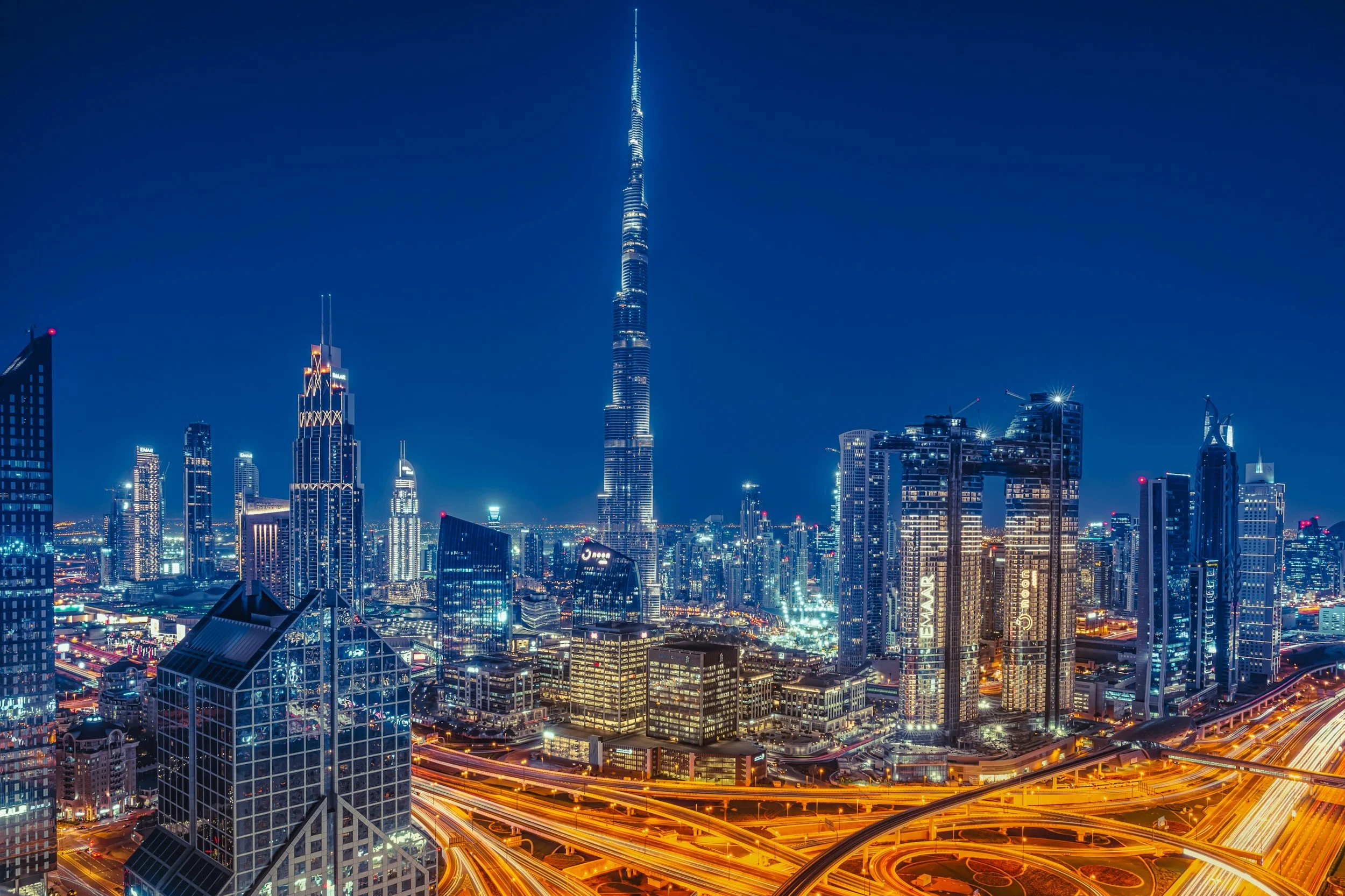
The UAE is probably the clearest case. Dubai welcomed 19.59 million overnight visitors in 2025. DXB handled a record 95.2 mil-lion passengers, the highest annual international traffic ever rec-orded by any airport. This is not a small side business. It is the core of Dubai’s identity as a hub for aviation, tourism, finance, property and trade. Once that image of safety is shaken, the ef-fect is immediate. In early March, UAE real estate transactions were reported down 37 percent year on year and 49 percent month on month. Dubai has already announced a 1 billion dirham support package, while the UAE central bank allowed banks to tap up to 30 percent of required reserves to protect liquidity. Those are not the moves of a market brushing off a temporary shock. They are the moves of a system trying to defend confidence be-fore the damage becomes self-feeding.
Saudi Arabia faces the same issue in a different form. Vision 2030 still looks huge on paper, but it is also capital-hungry and confi-dence-sensitive. The Kingdom’s 2026 budget projects a deficit of around SAR 165 billion. PIF assets under management stood at $913 billion at end-2024, which shows financial firepower, but not infinite insulation. Riyadh has already achieved or kept on track 85 percent of Vision 2030 targets, and the tourism ambition has now been lifted to 150 million annual visitors by 2030. The problem is simple. A country trying to sell itself as a tourism, lo-gistics, finance and investment destination cannot comfortably coexist with a neighbour that can repeatedly impose a war-risk discount on the entire region. Saudi oil revenues were already down 20 percent in 2025. Higher oil prices can soften that pres-sure, but they do not solve the deeper problem, which is the cost of living next to a permanent spoiler.
For shipping, the logic is even clearer. Before this war, the Strait of Hormuz carried about one fifth of global oil and LNG flows. War-risk premiums have jumped from around 0.25 percent of vessel value to as much as 3 percent in some cases. At least nine vessels have already been damaged while Brent is up roughly 59 percent in March. Saudi Arabia has responded by rerouting more crude through the Red Sea, with flows from Yanbu rising from around 770,000 barrels per day to 4.658 million bpd. That tells us two things. First, Gulf producers still have some flexibility. Second, they are already behaving as if a more securitised, more frag-mented export system may be needed if Iran’s current posture survives this war.
So the working assumption is no longer just that the Gulf wants calm. Of course it does. The more important point is that calm without a durable reduction in Iranian coercive power may no longer be good enough. If that proves true, Gulf strategy will move further in the direction of higher defence spending, tighter pressure on Iranian commercial networks, heavier maritime en-forcement, and more investment in alternative export routes and redundancy. Oil can pay for part of that shift. Their diversification model cannot thrive under it. That is why, for some Gulf states, the removal or decisive weakening of the current Iranian system may increasingly look less like ideological ambition and more like economic self-preservation.
Data Source: Intermodal