
The three things investors and businesses should know this week
The abolition of nearly 2/3 of “Liberation day” tariffs by the US Supreme Court prompted the White House to temporarily replaced them with a 10% to 15% blanket tariff.
The Court’s decision might have increased market uncertainty over the shorter term, but ultimately it reaffirms the rule of law in the US.
Expect policy to remain fluid, and uncertainty around existing trade treaties to persist for some time, but ultimately the view is that the White House will have to purse product-related tariffs.
As the Chief Economist, I often adopt a more defensive stance in terms of investments and the global economy, focusing on the economic and investment risks emanating from the White House’s trade aggression and disruption of the decades-old status liberal economic quo. As an investment strategist, I have made considerable investments betting that the US is a very deep market, powered by the global reserve currency and, more importantly, where the rule of law is strong enough to retain its status – even if it asserts itself with a delay.
This week, it’s point investment hat.
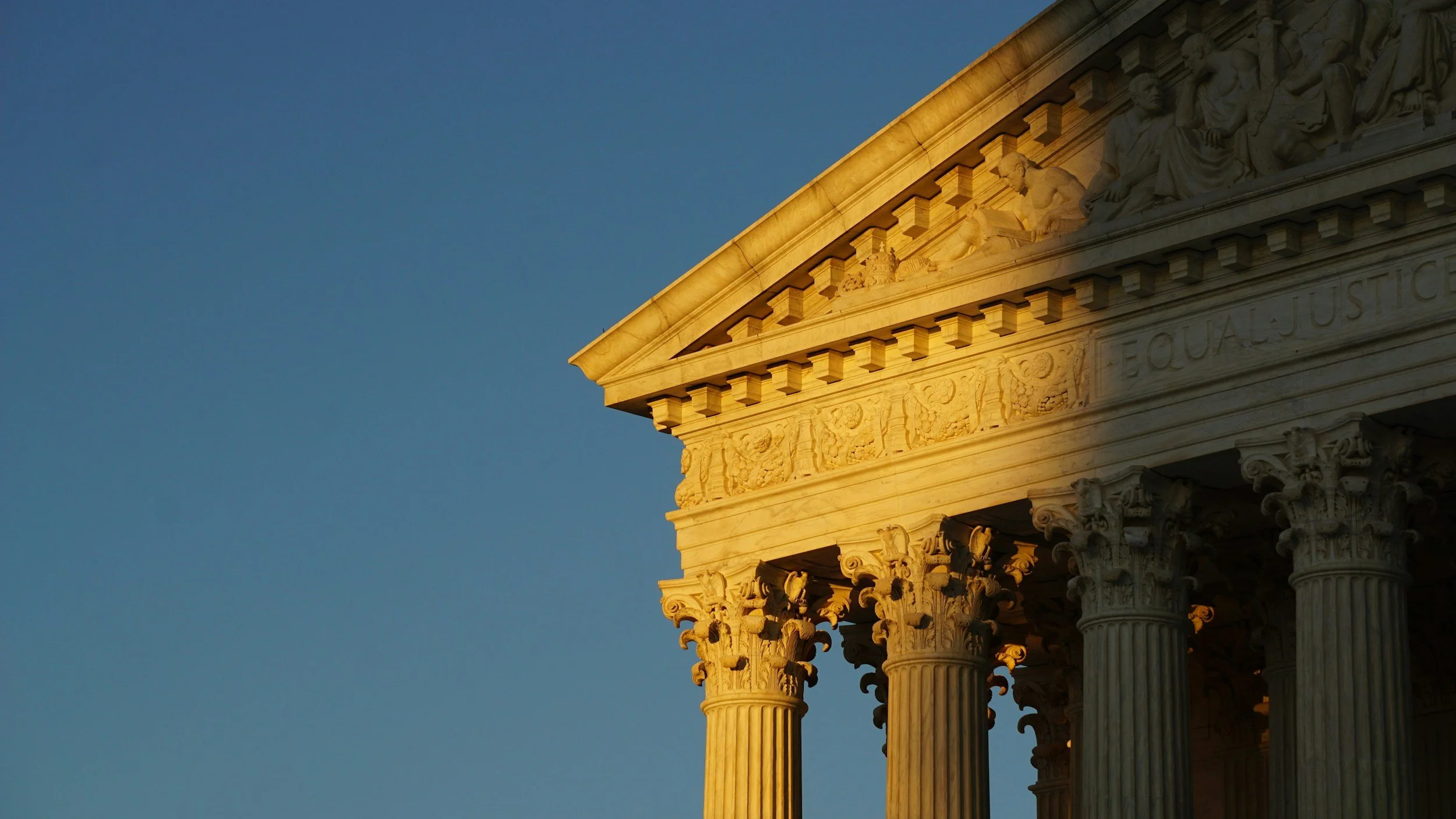
The Supreme Court of the United States (SCOTUS) reaffirmed the decision by lower and higher counts, that the unconstrained imposition of tariffs was not one of the President’s many prerogatives, cancelling Liberation Day’s so-called “Reciprocal tariffs” (roughly ⅔ of existing tariffs).
What does it mean for investors?
While markets remain slightly sceptical, worrying about what comes next in terms of tariffs, longer term investors can breathe a sigh of relief that their investments in the world’s biggest economy remain protected by potent legal shields. SCOTUS’s tariff ruling is expected (but should not be taken for granted) to precipitate the decision about Fed governor Lisa Cook, whose possible firing could be a crucial step to compromise the Fed’s independence and inflation-fighting ability. It is also likely that it reasserts SCOTUS’s gravitas as an organisation that will protect the validity of the Midterm elections in November.
In other words, when someone invests in the US, they still invest in the deepest, biggest and most reliable market in the world. This should remove some of the scepticism about flows into the dollar and US assets, especially US bonds, the bedrock of global portfolios.
What does the decision mean for the economy and businesses?
Possibly lower inflation and thus higher real growth for starters. It also means some mid-term uncertainty.
At the time of writing, the global tariffs stand at 10%. At the present level, this is roughly what the EU and the UK agreed to in their respective trade deals. The average tariff paid by the American Consumer is lowered from an estimated 16% to 12.2%, and 11% over the longer term, once Americans can substitute some of the imported products. If Mr Trump raises the tariffs to the maximum 15% that Section 122 of the 1974 Trade Act allows him, the numbers should be 13.7% (the short term high) and 12.2% the longer term, respectively. Inflation is expected to be impacted by 0.5% to 1%. Importantly, the fate of tariff refunds by importers was left to lower courts. FedEx became the first, and possibly not the last, major firm to petition the courts to claw back some of the tariff money paid. If all relevant tariff revenue were to be returned, it would leave roughly a $130bn hole in the budget, or 0.5% of GDP, possibly boosting economic growth for a short while. At the same time, it would necessitate increased borrowing, possibly driving long term yields (borrowing costs) higher.
Nevertheless, it is crucial to remember that the same Section 122 only allows the White House to impose tariffs for 150 days. Thus, in the middle of July it will be up to Congress, just ahead of the Midterms and with no room left for primary challengers, to approve the continuation of the President’s tariffs. That same Congress where Republicans, the party of free trade ideology, have the majority and which rebuked the attempt to impose very high tariffs on Canada just a few weeks ago. How it will vote in five months will depend significantly on economic performance and the President’s approval ratings at that time. But for the time being, the base case remains that blanket tariffs will likely dissipate in favour of product-specific tariffs.
I remain agnostic, however, as to the fate of the trade deals already signed with the EU, Japan, the UK and other countries. While SCOTUS can afford, and is in fact mandated to, defy the White House, the political realities that forced those countries to accept higher tariffs to maintain their right to access the world’s biggest consumer market, are still very much relevant.
Having said that, and with the Chief Economist hat firmly back on, longer term economic risks remain broadly to the downside, not so much because of policy-making but because of the uncertainty around it. Before Mr Trump’s first stint, tariffs were at 2.5%. At over 10%, they are still quadruple the previous status quo. Estimates suggest that consumers are still on the hook for higher prices, as they will increasingly be faced with post-April inventories which were acquired at higher costs. And, importantly, post-SCOTUS uncertainty creeping up could have negative effects on businesses that are already having a difficult time planning for their future operations.
The environment remains exceptionally fluid. Far from being a cop-out aphorism, “Resilience”, operational and financial, should be the mantra of all businesses right now, especially those with international operations or dependencies. The same resilience that is required from investors in global markets where volatility may well remain elevated, but so will investment opportunities.