
In the Asian calendar, the transition from the Year of the Wood Dragon to the Year of the Wood Snake was traditionally associated with a shift towards reflection, intuition and gradual transformation. In hindsight, those themes proved an apt metaphor for the global economic environment that unfolded over the subsequent twelve months. Today, as the Wood Snake gives way to the Year of the Fire Horse – a symbol of energy, endurance and amplified opportunity – the narrative has moved forward once again, yet the need for adaptability in a fluid macro and geopolitical landscape remains unchanged. Nowhere is this more evident than in China, where the interplay between structural adjustment and cyclical support continues to shape both the pace and the quality of economic expansion.
When we first assessed last year’s Spring Festival period, the focus was on the resilience of mobility in the face of mounting headwinds. The expectation at the time was for holiday travel to reach 9 billion trips, already a record and a powerful indication that activity levels had normalised after the pandemic years. Twelve months later, that benchmark has been comfortably surpassed. The current Chunyun season is projected to generate approximately 9.5 billion domestic journeys over the 40-day period, reinforcing the view that China’s transport system is now operating on a structurally higher base rather than merely completing a recovery cycle. The scale of these movements remains without parallel globally. Although China is no longer the world’s most populous country, the annual Spring Festival migration continues to be the largest concentration of human travel anywhere in the world. The extension of the official holiday to nine days has played a decisive role, allowing for longer journeys, more complex itineraries and a wider geographical dispersion of travellers. The result is not only higher aggregate volumes but also a deeper integration of lower-tier cities and regional destinations into the national tourism network.
The modal breakdown confirms the persistence of familiar patterns while also highlighting the continued strengthening of higher-value transport segments. Road travel retains its overwhelming dominance, accounting for the vast majority of daily flows, yet rail volumes have already exceeded 1 billion passengers since the start of the travel season, while air traffic is on track to approach 95 million travellers for the full period. In the first week alone, flights reached more than 16 million passenger journeys, underlining the steady recovery in long-distance mobility. High-frequency data from the opening days of the official holiday illustrate the intensity of this year’s surge. On the first day of the nine-day break, inter-regional movements reached 285 million trips, representing a double-digit annual increase. Road transport expanded by more than 10 percent year-on-year, while rail and air traffic posted solid mid-single-digit gains. Waterway travel, albeit from a smaller base, recorded the fastest growth rate. Parallel to the expansion in domestic mobility, outbound travel has continued to recover. Visa-free entry schemes, increased flight capacity and targeted measures to facilitate cross-border payments have supported a visible rebound in Chinese visitors to regional destinations in Asia as well as long-haul markets. This outward flow carries both economic and symbolic significance, marking the progressive reintegration of Chinese consumers into global tourism.
Yet the most important aspect of the current holiday season lies not in the scale of travel but in its relationship with the broader macroeconomic environment. Over the course of 2025 China’s growth trajectory moderated steadily, with year-on-year GDP expansion easing from 5.4 percent in the first quarter to 4.5 percent in the final three months – the slowest pace in three years. For the year as a whole, the economy expanded by 5.0 percent, achieving the official target but doing so primarily through an increased share of global goods demand rather than a strong domestic consumption cycle. From a structural perspective, the composition of growth remained consistent with the long-term transition towards a serviceoriented economy. The tertiary sector expanded by 5.4 percent, outpacing both industry and agriculture and confirming its role as the principal driver of activity. At the same time, the gradual deceleration in momentum suggested a clear policy preference for stability and risk containment in the final year of the 14th Five-Year Plan, rather than a return to large-scale stimulus.
It is against this backdrop that the Spring Festival once again assumed its role as the most important seasonal catalyst for consumption. Early indicators point to a solid increase in spending across retail, catering and tourism-related services. Average daily sales at major commercial and hospitality enterprises rose by 8.6 percent year-onyear during the first four days of the holiday, while traffic and revenue in key shopping districts recorded steady gains. Domestic tourism expenditure on major online platforms also moved higher, supported in part by a sharp rise in car-rental bookings, a segment that has benefited directly from the longer holiday window.
Policy support has been both broader and more coordinated than in previous years. In a rare joint initiative involving multiple central government departments, Beijing set out to transform the holiday into a nationwide “consumption feast,” linking regions and sectors through a combination of promotional campaigns and financial incentives. Shopping vouchers, targeted subsidies and the continuation of the large-scale trade-in programme for consumer goods were all deployed to raise spending intensity. The impact of these measures is already visible. By mid-February, close to 28.5 million consumers had taken advantage of subsidies to replace older products, generating nearly RMB 200 billion in sales, with automobile purchases accounting for roughly half of the total. At the same time, efforts to attract inbound tourists included the expansion of international flight capacity and the simplification of payment procedures for foreign visitors, complemented by multilingual cultural initiatives designed to enhance the holiday experience.
These developments underline the central challenge facing China’s economic transition: mobility has fully normalised and continues to grow, but the conversion of that mobility into higher per-capita spending remains a work in progress. Retail sales growth slowed to 3.7 percent in 2025, and deflationary pressures persisted, highlighting the need for new demand drivers as the economy shifts away from its traditional investment-led model. The evolution of the Spring Festival economy therefore provides a microcosm of the broader structural adjustment. On the one hand, the scale of travel, the resilience of services consumption and the gradual revival of international tourism point to a society that has regained confidence in movement and social interaction. On the other, the emphasis on policy incentives, value-oriented spending and experience-based consumption reflects a more cautious approach by households.
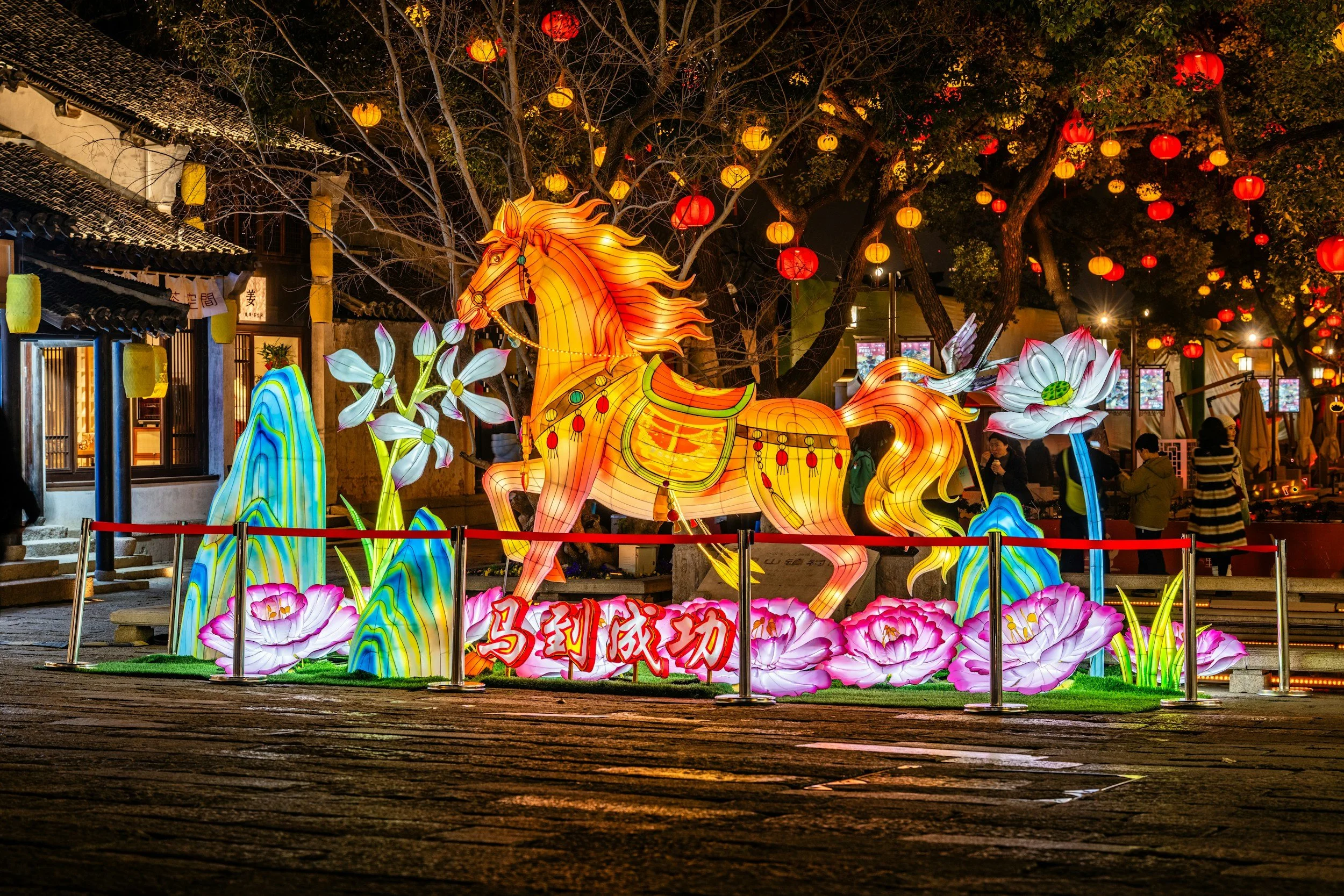
In symbolic terms, the transition to the Year of the Fire Horse captures this duality. The horse is traditionally associated with strength, stamina and forward momentum, while the element of fire amplifies both opportunity and volatility. In economic terms, this suggests a period in which growth potential remains significant but is accompanied by a higher degree of differentiation across sectors and regions. Twelve months ago, the dominant narrative was one of adjustment, with markets and policymakers alike navigating a turning point marked by weak sentiment and seasonal headwinds. Today the environment appears more dynamic. Activity indicators are stronger, mobility has reached new highs and consumption is receiving increasingly targeted support. The Spring Festival of 2026 therefore stands as a clear illustration of China’s current economic phase: larger in scale, more service-oriented and more geographically diversified than in the past, but also more dependent on policy calibration and structural reform to unlock the next stage of demand growth. As the Fire Horse begins its cycle, the defining feature of the landscape is not the absence of momentum, but the need to channel that momentum into a more sustainable and consumption-driven model of expansion.
Data source: Doric