
Rising geopolitical tensions pushed energy markets higher. Industrial metals gained after Trump’s reciprocal tariffs were deemed illegal. Precious metals also rose.
By Daniel Hynes
Market Commentary
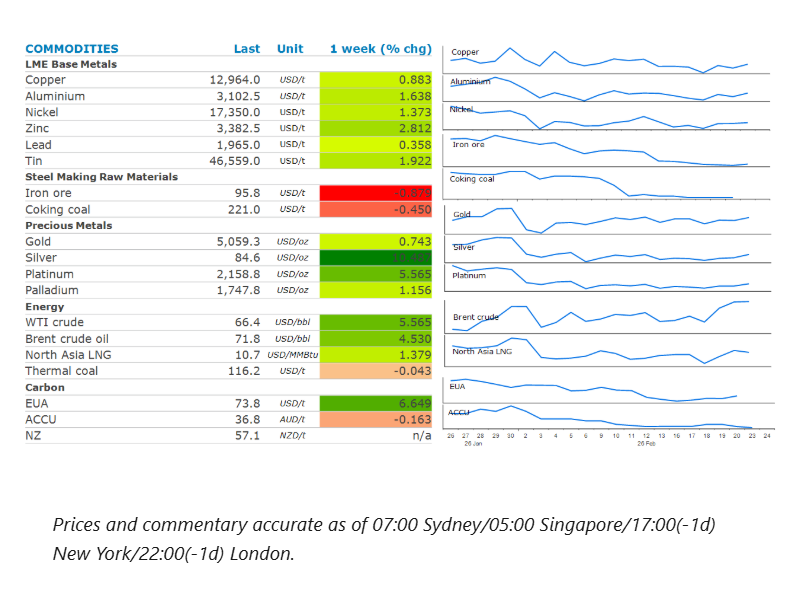
Copper led the base metals sector higher on Friday after the Supreme Court tariff decision. The ruling strikes at the heart of Trump’s agenda, an all-purpose tool that he has wielded against major trading partners. It has disrupted trade flows and threatened to weaken economic growth. This had raised concerns about copper demand. While Trump has subsequently said that he will replace the reciprocal tariffs with a broad 15% levy, its implementation is likely to be more cumbersome or limited in its effect. The red metal gained more than 1.5% before paring some of the gains late in the session. The levies ruled on by the Court are separate to the sector-specific tariffs that Trump put on aluminium, steel and copper products on national security grounds. Nickel ended the week up more than 2% has the market contemplates the decision by Indonesia to restrict nickel supply. Officials announced production at Weda Bay will be capped at 12mt of nickel ore, down from 42mt in 2025. Quotas across the rest of the country’s mining industry will also be reduced.
Gold rallied on the tariff ruling, wiping out loses from earlier in the week. The move triggered a weaker USD, which boosted investor appetite. This was aided by the prospect of the US Treasury having to refund levies paid by importers. Rising geopolitical tensions in the Middle East also supported investor demand as they sought haven assets. Concerns over Fed independence resurfaced. Fed official Neel Kashkari said recent comments by Kevin Hasset critical of a New York study on tariffs undermined the central bank’s independence. Sentiment was supported by strong retail demand in China during the Lunar New Year holiday. Hong Kong reported a 13% surge in visitors from mainland China, boosting jewellery sales by 10%. Investment gold retailers have also been increasingly taking up positions in high street shops amid a surge in interest for gold coins and bars.
Crude oil gained last week as the likelihood of US military action with Iran increased. Trump has been mulling a limited strike on Iran as he tries to force a deal over its nuclear program. He has warned Iran has 15 days to reach a deal. A potential war would jeopardise flows from a region that pumps about a third of the world’s supplies. This has seen the market build in a relatively large geopolitical risk premium in current oil prices. Adding to the bullish momentum last week, US crude oil stockpiles fell by 9mbbl last week, according to Energy Information Administration data. The build was the largest since September but was offset by inflows into the Strategic Petroleum Reserve. The commodity was also swept up by stronger US equity markets following the US High Court ruling on tariffs, which had stoked fears about the global economy and energy demand.
European natural gas futures erased this week’s rally on signs of improving supply. Prices had been supported by the mounting tension in the Middle East. Yet shifting weather patterns and ample fuel flows have helped ease some of those concerns. In recent days, LNG imports at some northern European terminals have rebounded. Temperatures are also expected to be above seasonal averages for the rest of the month. These eased concerns of supply tightness amid strong withdrawal from storage facilities in recent weeks. North Asia LNG followed European prices higher early in the week. This was aided by increased buying in the spot market.
Chart of the Day
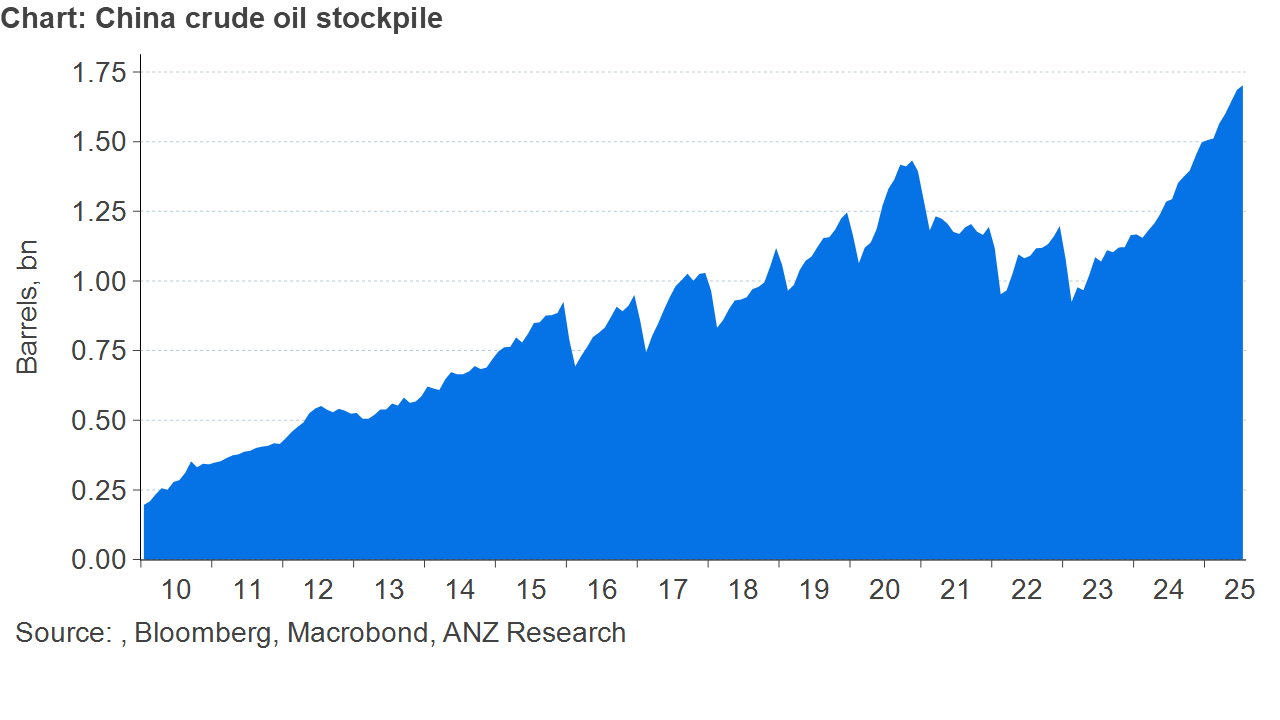
China’s stockpiling of crude oil last year went a long way to keeping the market tight after OPEC started rolling back its production cuts. That stockpiling could continue in 2026 amid the increased risk of supply disruptions. The US is threatening to attack Iran in a bid to reach deal on its nuclear program. Recent peace talks have done little to bring Russia and Ukraine closer to an end in their war. Any further stockpiling by China could see the looming market surplus come in much smaller than expected.
Data source: Commodities Wrap